01
Look
The first front is already standing when you arrive. Set a lane before the ball moves.
Four downs
A ball carrier, a shifting front, and a chain that only moves when you earn the yards.
01
The first front is already standing when you arrive. Set a lane before the ball moves.
02
One crease at a time. Against a shade, the late cut beats the early one.
03
A short surge narrows your shoulders. Skim an edge to break the tackle. The chest still stops you.
Tonight
Night 1 is open. Clear it to stretch the next chain.
Night
Playbook
You are not racing a clock. You are spending four downs to drag a chain, then the end zone.
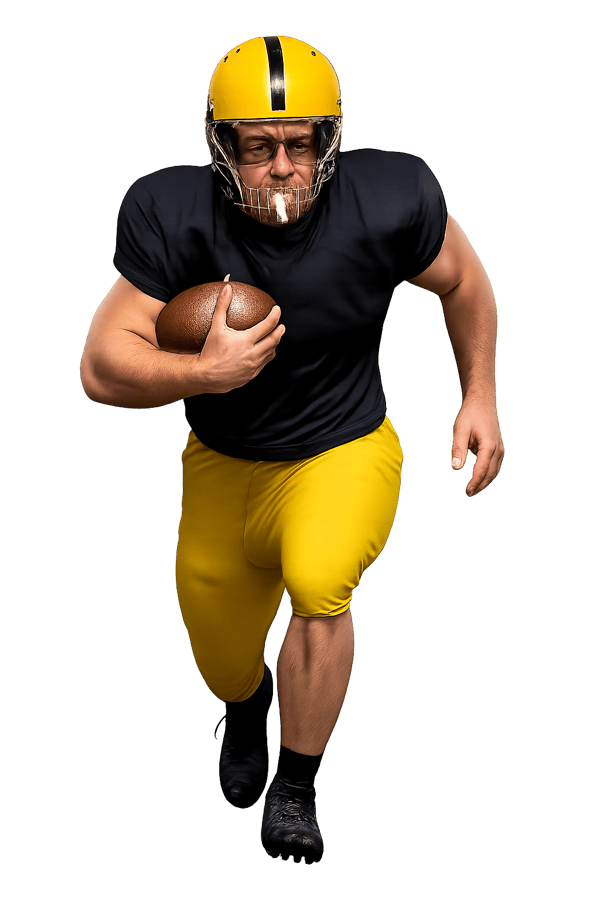
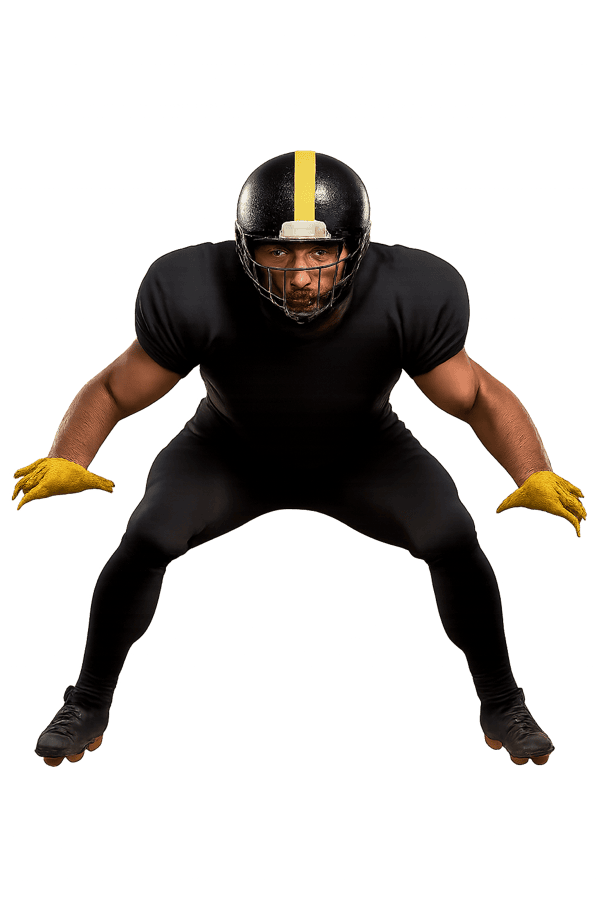
Study the bodies already on the yard lines. Left and right set your starting crease. Nothing moves until you snap.
Cross the yellow line to reset all four downs. The real football chain is ten yards. On this field the chain is longer, so each read has time to finish. Near the goal the bug switches to goal.
A chest hit spends a down and gives back seven yards. That defender is on the ground afterward. A cone does not spend a down: it shoves you one crease and takes three yards. A burst that only catches a shoulder breaks the tackle and adds yards.
Holds one crease. Go around. Do not try to run through the numbers.
Sways off the home crease after the snap. Wait for the hip to clear, then cut.
Shows a yellow tell, then commits to the lane you occupy. Leave after the tell, not before.
Two shoulders on a slide. The edge lanes open and close. Time the gap. A wall cannot be skimmed.
A shove, not a tackle. If it pushes you into a body, that second contact is a real down.
Cut buttons and sideways swipes move one crease. Burst is the wide control. On a keyboard, A and D cut, and space bursts.
Roster
Meliro does not carry a full sideline. The drive belongs to a runner, a caller, and a shoulder.

Halfback
He watches the near hip, not the helmet. An open hip means the crease is about to close, so he would rather lose a yard setting his feet than meet a squared shoulder.
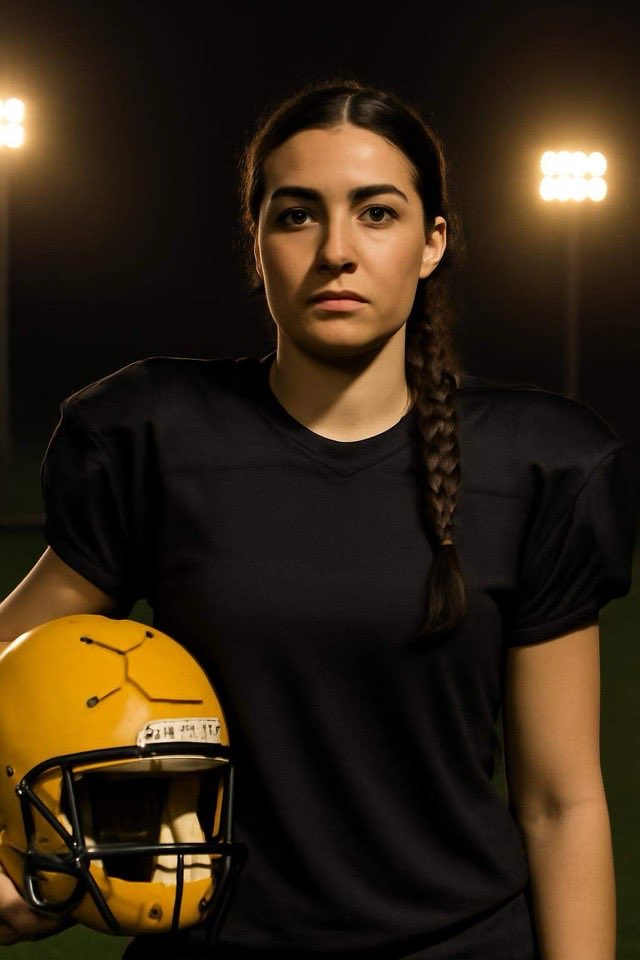
Front caller
Quill names the front before the snap. Anchors, shades, and blitz tells in the playbook are her language. She wants the carry to start where the picture is honest.
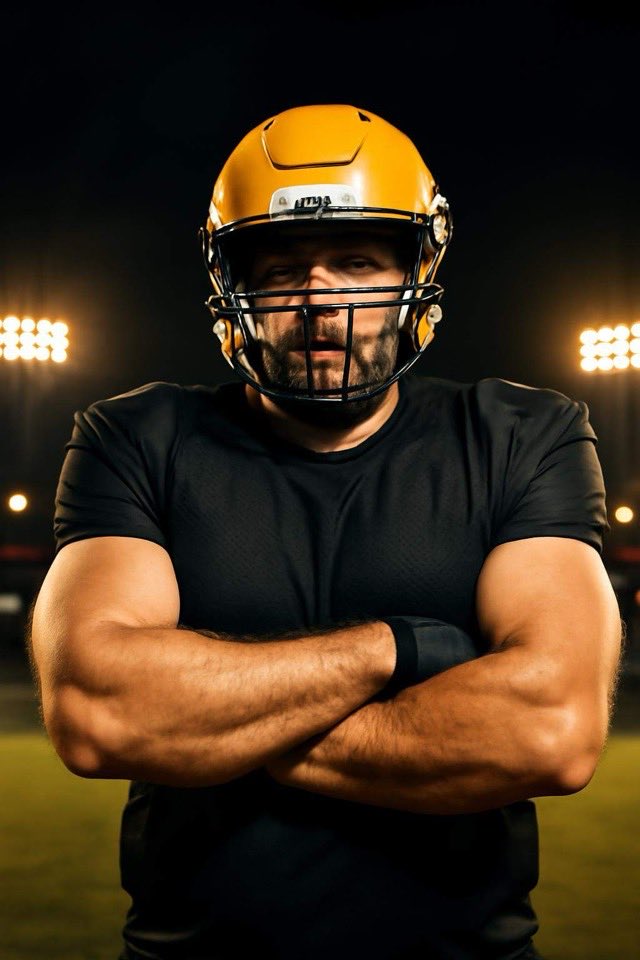
Lead shoulder
Walls are his problem. He tracks the slide and tells Voss which edge will still exist when the shoulders arrive. If Calder says wait, the burst stays in the pocket.
Field notes
Between the center and the guard is the A-gap. Between the guard and the tackle is the B-gap. Outside the tackle is the C-gap. Ball carriers do not memorize the letters during the run. They watch which gap a defender has already claimed, then take the one that is still empty.
Touchdown Run folds that read into four creases. If two are occupied, the picture is the same as a crowded interior line: do not invent a lane that a body is already using.
A first down is not a score. It is a reset. The chain crew holds two sticks ten yards apart, and the offense has four downs to move the ball from one stick to the other. Miss, and the drive is over even if the end zone is close enough to see.
That is why a tackle here spends a down instead of ending the night immediately. You can be stopped and still finish, as long as one of the four plays reaches the yellow line.
A settled defender shows it in the hips. Helmets lie. A hip turned toward you means that crease is closing even if the shoulders have not arrived. Shades in this drive are that idea made visible: they leave home late, and the window is the moment between the lean and the arrival.
Blitzers are the opposite read. They tell you, then they choose. Cutting early only gives them a new lane to commit to. Cut after the yellow tell locks.
A sprint start drops the hips and makes the runner narrow. That is useful beside a shoulder and useless against a chest. Calder's rule on the sideline is short: burst when you are already in the gap, never to create one. Walls ignore the surge. They are too wide to skim.
Marks
Marks live on this device. A call sign is the name beside the drive, nothing else.